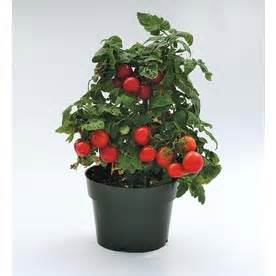
• tomato in pot

    TOMATO
    Solanum lycopersicum
    Every gardener should grow a few tomatoes – there is such a diverse selection of plants now available. The traditional varieties such as ‘Alicante’ and ‘Moneymaker’ still retain their popularity however hybridization has led to the development of hundreds of tempting varieties. Many of these require lower maintenance and are more disease resistant so can easily be cultivated by the domestic grower.

    My father produced tomatoes under heated glass on half an acre in east Cork before the oil crisis hit in the 70’s. He was retired by the time I showed a dedicated interest in horticulture and unfortunately died just days before I received my graduation from the Botanic Gardens. I have one photo of me as a little girl lost amongst hundreds of tomato plants in the glasshouses, oblivious to the fact that my future grew before me! My dad’s tomatoes were renowned for their sweet flavour but I have yet to recapture it!

    The tomato fruit has an interesting history, first originating in South America and carried back to Spain during the days of the conquistadores. In its natural habitat it is a perennial plant which grows wild but possibly does not resemble our cultivated varieties which have now adapted to a completely different climate. Its strange relative Tomatillo aka husk tomato is used a lot in Mexican cooking and forms the base for salsa verde and other chili sauces. I have grown it out of curiosity! Both are in the Solanacea family cousins of the potato but also relatives of that black enemy ‘deadly nightshade’ which of course is seriously poisonous.

    Tomato varieties are best listed into groups in an effort to understand their individual qualities:
    Classic/Traditional; This is the simple tomato as we all know it. These are often referred to as cordon varieties and all of them require staking and side shooting. The tip should be removed after the plant has produced 6-7 trusses (bunches) of flowers to ensure the plant directs its energy towards ripening. Although they can be grown outside in a sunny, sheltered position they are more suited for indoor culture. My specialty this year is an unnamed heirloom variety I got from an ardent gardener in Jersey Island. The young plants look incredibly strong with broad leaves and I have been giving them to friends to try. Another variety I grew was a yellow tomato called ‘Golden Sunrise’. Unfortunately I rarely get to taste all the varieties I grow from seed so I have to rely on my customer’s feedback.
    Plum: Last year I propagated an heirloom tomato called ‘San Marzano’ and it has proved a great success. It is revered in Italy and – evidently – by gourmet chefs worldwide as the best tomato for cooking. As the story goes the King of Peru gave the seeds to the King of Naples as a royal gift; no doubt a similar gesture to our president presenting shamrock!

    Beef: I have also produced plants of the variety ‘Marmande’. It may prove difficult to ripen in our short summer but could definitely be used to make chutney!

    Bush: These dwarf plants which produce full-size tomatoes have been bred for outdoor production. I have not grown them for many years.

    Cherry: These come in two sizes the upright such as “Gardeners Delight’ which again requires staking and side shooting, and, the dwarf cherry which is my ultimate favourite. Varieties such as Minibel, Tiny Tim and Tumbler can be grown in large pots or hanging baskets. They require no side shooting or staking just basic liquid feeding and diligent watering. I would recommend these for the beginner and also children love them. The extra advantage is the pot can be moved inside to a sunny windowsill in autumn to aid ripening process.

  • Greta’s Herbs

    Papaver orientalis
    Papaver orientalis

    The Ornamentals
    There are numerous beautiful flowering plants which we may not readily associate with the herb category. Many medicinal herbs are very decorative and the more lavish varieties tend to be cultivated relatives of their plainer counterparts, such an example is Tanacetum parthenium ‘Tetrawhite’ (double flowering feverfew). This is a cousin of common feverfew (T. parthenium) which has golden foliage and single daisy flowers. But beware it has a self-seeding nature!
    The annual salad herb ‘Chop-suey greens’ is actually a Chrysanthemum. The young leaves should be harvested when they are 2” to 3” long. They have a strong, unique flavour and can be added sparingly to salads and oriental stir-fries. An extra bonus with this plant is that later in the season it produces startling yellow daisies on sturdy stems. These are ideal for cutting and can also be used for salad/plate decoration.
    The well known medicinal St John’s wort belongs to the Hypericum genus. This has many showy relatives such as the shrub H. hidcote and the invasive creeper H. calycinum (Rose of Sharon). All produce plenty of yellow blossoms throughout the summer and are often semi evergreen.
    One of my favourite groups is the delightful poppy family. The medicinal Papaver somniferum (opium poppy) which has been the source of morphine has many ornamental relatives, all producing impressive flowers and decorative seed pods. I once grew the Hungarian blue seed poppy whose violet flowers are really beautiful. The seed is treasured by bread makers and the pods can be used as seed shakers. There are lots of other varieties producing a rainbow of colour. The Oriental poppy and the Iceland poppy are the two most recent I have enjoyed growing from seed, and they have served me well.
    A selection of thymes will provide lots of colour. Many are mat forming and produce stunning flowers from pink to red. These can be used to edge pathways, containers or rockeries. Their aromas will up-lift the spirit of the garden and increase honey bee activity. These herbs enjoy full sun in a sandy soil. Thymus citriodorus varegata ‘Aurea’ aka gold variegated lemon thyme is extremely pretty and has a reputation for being hardy hence it is often referred to as ‘winter thyme’.
    To create a themed herb garden, boundaries may be inter-planted with honeysuckle and roses. Pathways and low borders can be enhanced with lavenders, hyssops or sages.

    ‘I know that if odour were visible, as colour is, I’d see the summer garden in rainbow clouds’ Robert Bridges.

  • Greta’s Herbs

    The last two months have been a litany of toppled trees, torn tunnels, ripped roofs and endless floods: some sort of Armageddon! I am writing this in the flickering candlelight; imagining the blackouts during war time, waiting for the sirens! In my four decades of gardening I have never endured such violent weather. Nature with all it’s beauty has a dark side too.
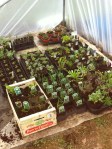
    Now without my polythene tunnel I am prone to lamenting- February is usually the month I eagerly commence sowing. I have not enjoyed the annual burst of excitement on receiving my seed catalogues. Spring has never felt so bleak. Luckily some kind friends are allowing me to use their glasshouse to start my seeds. I have retained several varieties from last year: many are in opened packs but have been stored carefully in biscuit tins. Regardless of all else these little gems of hope have survived. Once the temperature rises above 10ºC, I will sow the hardy varieties such as: Lettuce, Rocket, Mizuna and Purple Sprouting Broccoli. New additions I plan to grow this year include Wild Garlic, Red Pak Choi and Purple Pod Mangetout Pea.
    I have made numerous attempts down through the decades to source my favourite Lettuce- ‘Suzan’ a beloved variety from my childhood. It was the very first vegetable I harvested to sell to our local shop in Cloyne, East Cork; all under the guidance of my father. On a recent visit to my friend in Tipperary who is studying organic gardening and was eagerly browsing the online seed sites, we spotted it. She added it to her order and promptly posted it to me. It makes me nostalgic; I finally get a chance to grow Lettuce ’Suzan’ again. If my memory serves me right this butter head variety has a soft, gentle texture and a very large white heart!
    There is endless tidying up to be done outside. Fallen trees and shrubs which have their root system intact may be replanted, staked and braced once the storms have passed. The earth is saturated so I will not be surprised if some of my herbaceous perennials such as Lupin or Poppy have rotted.
    To my great delight my goldfish produced lots of tiny babies late last summer. Unfortunately the water table rose rapidly; lifting the pond liner. Alas, I reckon many of those little ones may have escaped and gone swimming down the field. The original adult gold fish have doubled in size and seem to thrive in the nutrients added by the constant rainfall.
    The other positive thing about this harsh weather is the cleansing factor. Hopefully every pest and disease will have been wiped out or drowned, including those nasty vine weevils that lurk in our pots nibbling the roots of our precious plants.
    I am expecting the season to run late, crushed daffodils may still bloom. I await the arrival of wind-borne migrating birds, the fittest will survive. Nature may catch up, as for me: well I can only try!

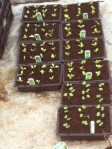
  • Many seed packets state that heat is required for germination and by that I mean artificial heat as used in large commercial production. However, from my experience I have found that most seeds will germinate in a cold greenhouse or tunnel, and even on a sunny windowsill if the below method is applied. Though germination may be slower and sometimes erratic this should not cause despondency; for domestic production a mere handful of seedlings is usually sufficient. Sow small seed such as fennel and chives in a seed tray in compost that specifies seed sowing as well as potting. This is important as it may be minus the element of phosphate which is essential for healthy seed germination and formation. I usually use half trays and three different varieties may be sown alongside each other.
    Do not over sow; in crammed conditions seeds will stifle and disease may strike. A maximum of ten seeds per variety is adequate and allows for a sensible failure rate which can occur for various reasons listed below.
    Cover trays with glass and place newspaper on top. This creates a snug micro-environment. Daily inspection is vital; turn the glass to dispense of condensation, to prevent the fungal disease – damping off which causes seedlings to shrivel up and die. Always replace the newspaper to retain moisture in the compost and prevent sun scorch.
    This is a very important exercise which requires consistency and diligence. The crucial point is the removal of both glass and newspaper the minute one observes the slightest emergence of green shoots. If this is done too late the resulting seedlings will grow weak and spindly in a frantic effort to reach day light.
    Water these seedlings gently at all stages with a fine spray and cover initially by night with newspaper of garden fleece particularly if temperatures fall below 10 degrees. If growing on windowsills rotate the containers each day to aid a balanced access to light otherwise the seedlings will grow askew resulting in a distorted plant,
    Seedlings will require transplanting into pots or cell trays when they have developed their second pair of leaves called true leaves. This development varies slightly depending on the variety and temperature but usually it takes about 10 to 20 days. Handle delicately; lifting by the seed leaves (first set of leaves) not the stems.

  • This slideshow requires JavaScript.

    SAM_2868   http://www.dinglefood.com/event.asp?p=workshops-at-the-dingle-food-and-wine-festival  

    Managing your Herb Garden for your Kitchen
     
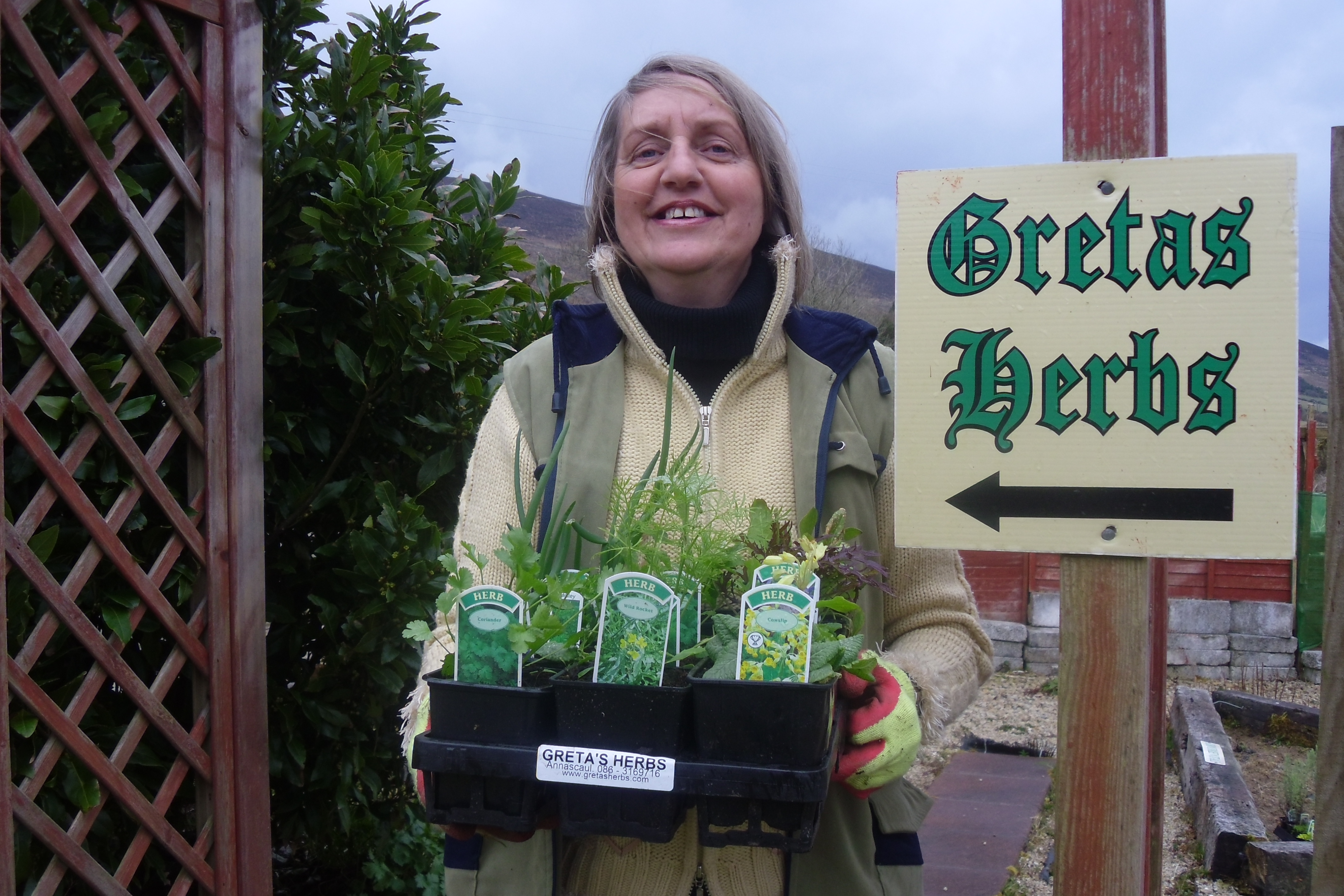
    Greta qualified in Amenity Horticulture at the National Botanic Gardens in 1983 and has specialised on the topic of herbs for almost twenty years. Greta’s Herb Nursery is based in Annascaul where she produces and distributes a wide selection of potted herbs. She is highly regarded locally for her extensive knowledge and for her quality plants. This workshop will give you the knowledge and skills required to grow and manage herbs for your kitchen whether you are a novice or a devotee.
     
    Further information can be found on http://www.gretasherbs.com
  • Book Reading from Joy Larkcom
    Book Reading from Joy Larkcom

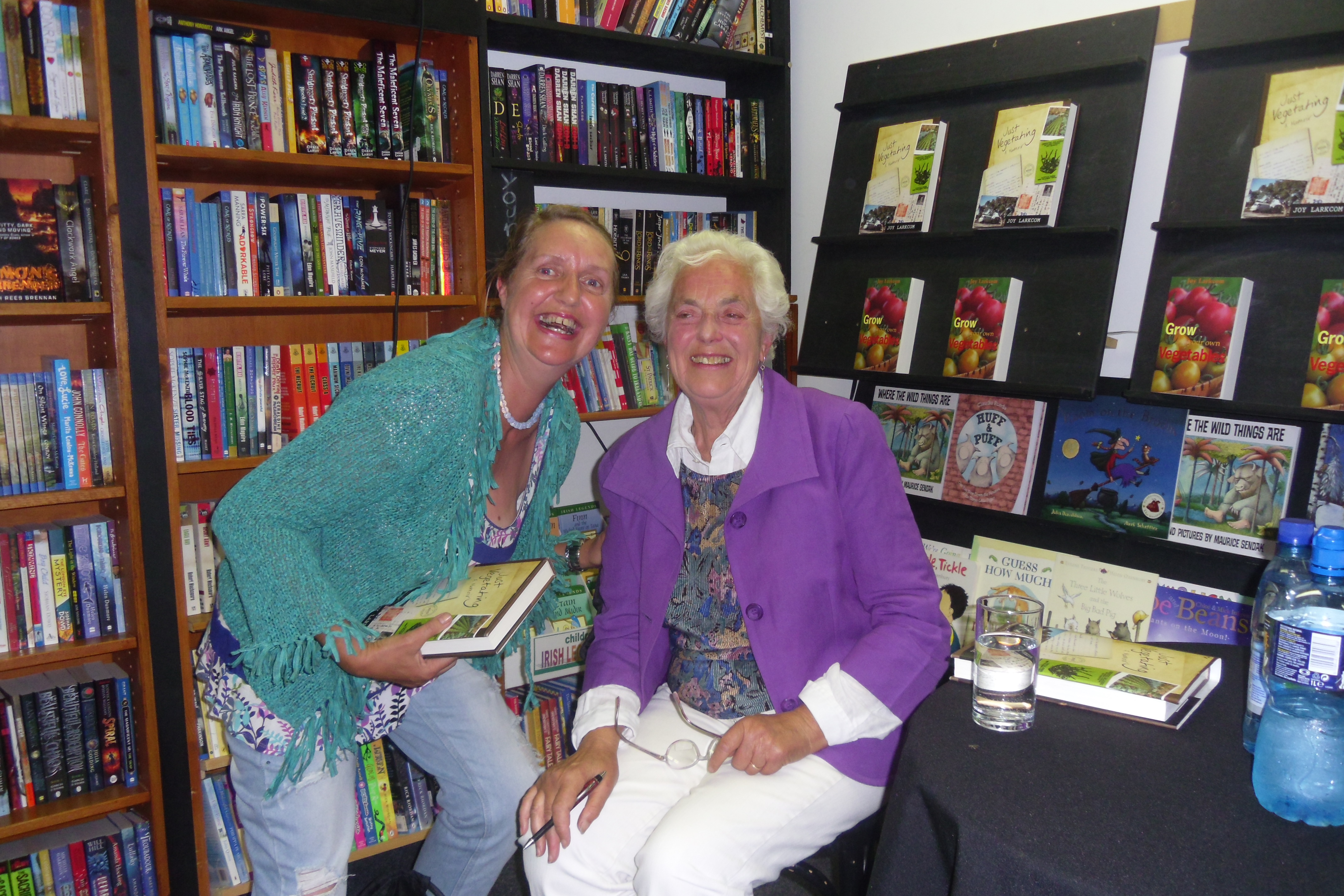
    It was a great pleasure to hear Joy read from her wonderful book of memoirs ‘Just Vegetating’ . She has written many gardening books and has led a very interesting gardener’s life!